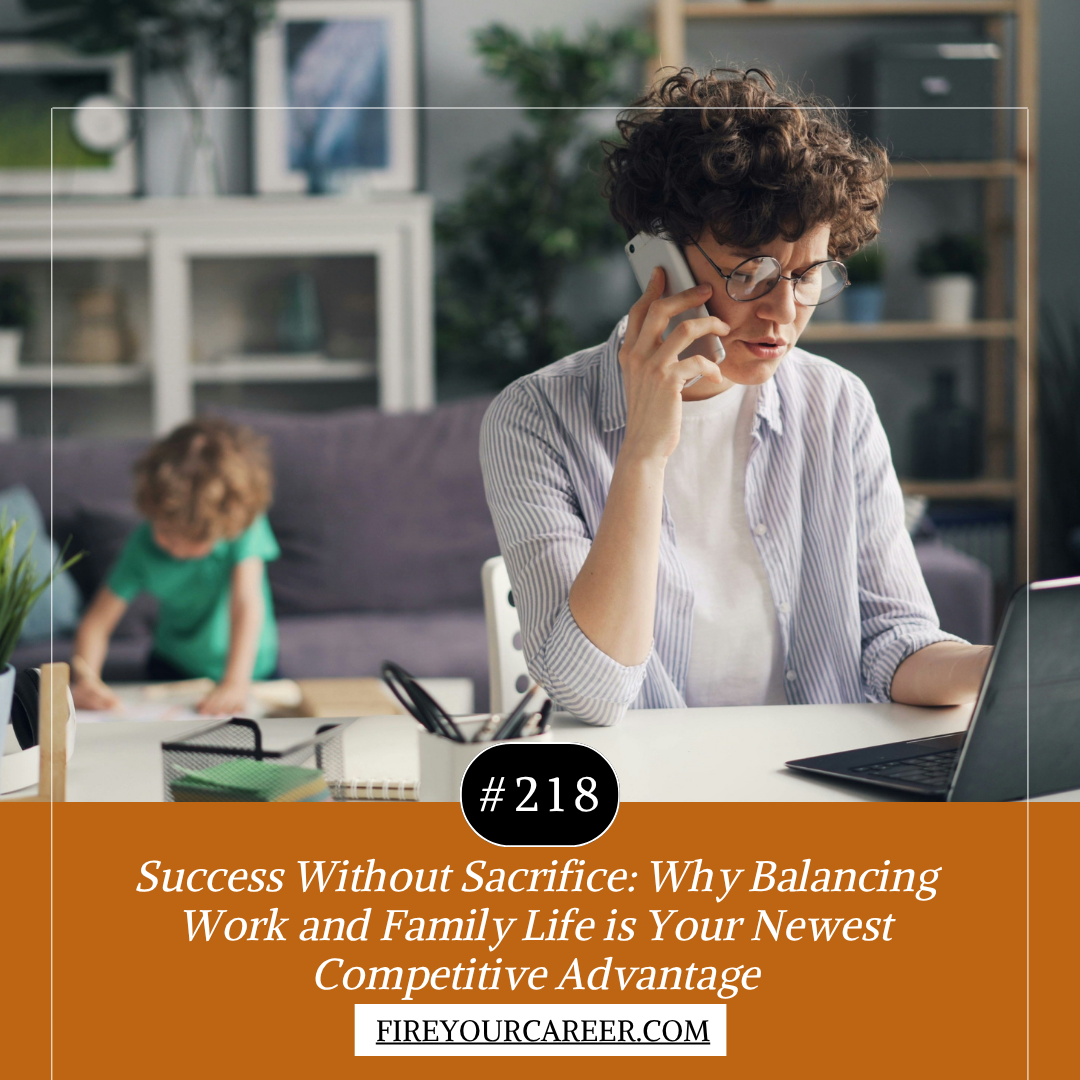
#218 Success Without Sacrifice Why Balancing Work and Family Life is Your Newest Competitive Advantage

#218: Success Without Sacrifice: Why Balancing Work and Family Life is Your Newest Competitive Advantage –

Effectively balancing work and family life can be your competitive advantage at work. It might sound strange, but it can even help you stand out from your colleagues.

For years, the corporate world whispered a persistent myth: that to reach the pinnacle of your career, something had to give. That “something” was usually time with the people who mattered most. 

We’ve been conditioned to believe that exhaustion is a badge of honor and that hustle requires a sacrifice of the soul. We’ve learned that sacrifice is the price of admission for success.

In fact, there’s a lot of evidence that the opposite is the truth. Balancing work and family life isn’t a distraction from success; in fact, it can be the engine that drives it.

The modern economy increasingly values creativity, emotional intelligence, and sustainable output, allowing us to discover this profound new truth. Balancing work and family life is no longer simply a personal preference.

Harmony between your professional ambitions and your domestic joys is more than just getting by; it’s about standing out.

The most effective professionals aren’t the ones staying until 9:00 PM every night. They’re the ones who have mastered being present at the desk and the dinner table. 

The most successful people don’t work the longest hours; rather, they have the most clarity. That clarity comes from a full heart and a stable home.

This is why balancing work and family life is the ultimate competitive advantage. We’ll dive into the specifics of how you can masterfully balance work/life to achieve harmony between home and work.

Read More

#216: Chaos to Quiet Confidence: How to Master Mindfulness for Anxiety

#216: Chaos to Quiet Confidence: How to Master Mindfulness for Anxiety –

How do you cultivate mindfulness for anxiety? 

Our society glorifies hustle culture. We’re constantly plugged in, our phones ping constantly with notifications, and we’re pressured to achieve more, faster.

The nonstop buzz can create an underlying hum of chaos, one that easily vibrates into a tone of anxiety.

It’s easy to feel anxious when you’re constantly on the go. It can be difficult to calm the chaos and relax.

Anxiety isn’t just unpleasant; it steals your time, focus, and happiness. It can paralyze your decision-making when you most need it.

However, there is a way to turn the volume down on chaos. You can replace it with a centered, steady sense of quiet confidence. 

The answer isn’t fighting the chaos; it’s changing your relationship with it. A good self-care routine can help you unwind and address your mindfulness needs. Maybe you prefer a mix of meditation, a warm bath, or a good book.

In any case, you’ll learn a series of habits and practices you can implement to master mindfulness for anxiety.

Read More

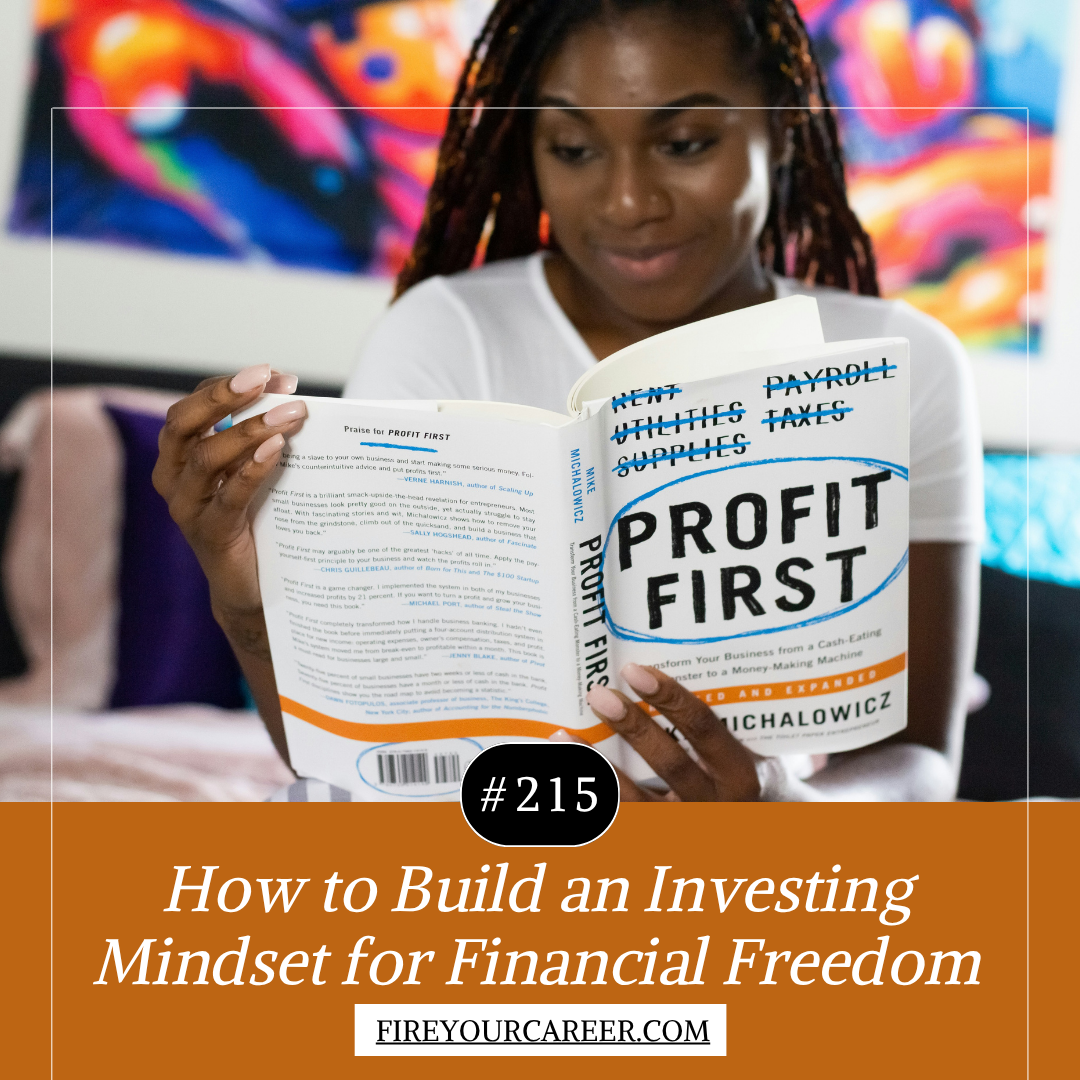
#215: How to Build an Investing Mindset for Financial Freedom

#215: How to Build an Investing Mindset for Financial Freedom –

An “investing mindset” prepares you for long-term financial freedom. To truly achieve life on your terms, you must cultivate a mindset that works for you, and that includes investing. Here’s why:

For one, an investing mindset is about recognizing that every dollar is a “seed” intended to grow into a “tree” of passive income, providing you with the shade of security for years to come.

Secondly, it’s easy to focus on the numbers, because let’s face it, investing is a numbers game. However, there’s a lot of psychology that happens behind the investing scenes, whether or not you’re aware of it.

It’s about perception…

The stock market alone is valued based on the perception of value. Read that again. Some of that actual value is based on reality, while the rest reflects investors’ perceived potential.

Confused yet? We’ll break it down soon, but let’s get back to what it means to have an investing mindset.

And your mindset…

To develop an investing mindset, you’ll need to understand your own psychology, but you’ll want to understand the psychology of other investors, too. If you follow stories like “Wall Street Bets” (look it up if you aren’t familiar), you know that even a motivated group can sway a stock price.

What does that mean for your investments? The stock market is like the ocean tide – it rises, it falls. Those falls can be scary, and if you intend to invest in stocks, you’ll need to learn to stomach them.

You don’t want to sell a large portion of your investments in a down market, because then you’ll realize a loss. You’ll also want to be strategic about when you buy (within reason), so that you don’t always buy at the top or consistently sell at the bottom.

This is where your investing mindset can be your strategic advantage. You’ll learn to make strategic investments without emotion, enabling you to be practical and tactical.

In this article, you’ll learn everything you need to build an investing mindset that helps secure your financial freedom.

Read More

#214 How to Build Job Resilience into Your Career Plan

#214: How to Build Job Resilience into Your Career Plan –

When it comes to professional growth, one of your greatest assets is job resilience.

Job resilience is your ability to bounce back, adapt, and thrive amidst uncertainty and chaos. It’s the invisible scaffolding that supports your career when the external environment becomes shaky.

It’s nice to focus on the good stuff, like your long-term career trajectory and climbing to the top, but few careers are without hardship somewhere along the way.

If we’re being honest, most careers look less like a straight ladder and more like a rugged mountain trail. Throughout your journey, you’ll get breathtaking views, unexpected storms, and the occasional mudslide.

How do you navigate difficult terrain without burning out? It all comes down to job resilience. 

Perhaps the most valuable skill in the professional world, job resilience is the ultimate shock absorber. It enables you to adapt to difficult conditions, recover from setbacks, and remain clear on your goals, even amidst chaos.

Building job resilience into your long-term plan ensures that you aren’t just a passenger in your professional life, but the driver, capable of navigating through storms without losing sight of your ultimate destination: financial freedom and a life built on your terms.

When you build job resilience into your long-term career plan, you prepare yourself to thrive, regardless of the professional curveballs thrown your way. In this article, we’ll explore what it means to build job resilience into your career plan.

Read More

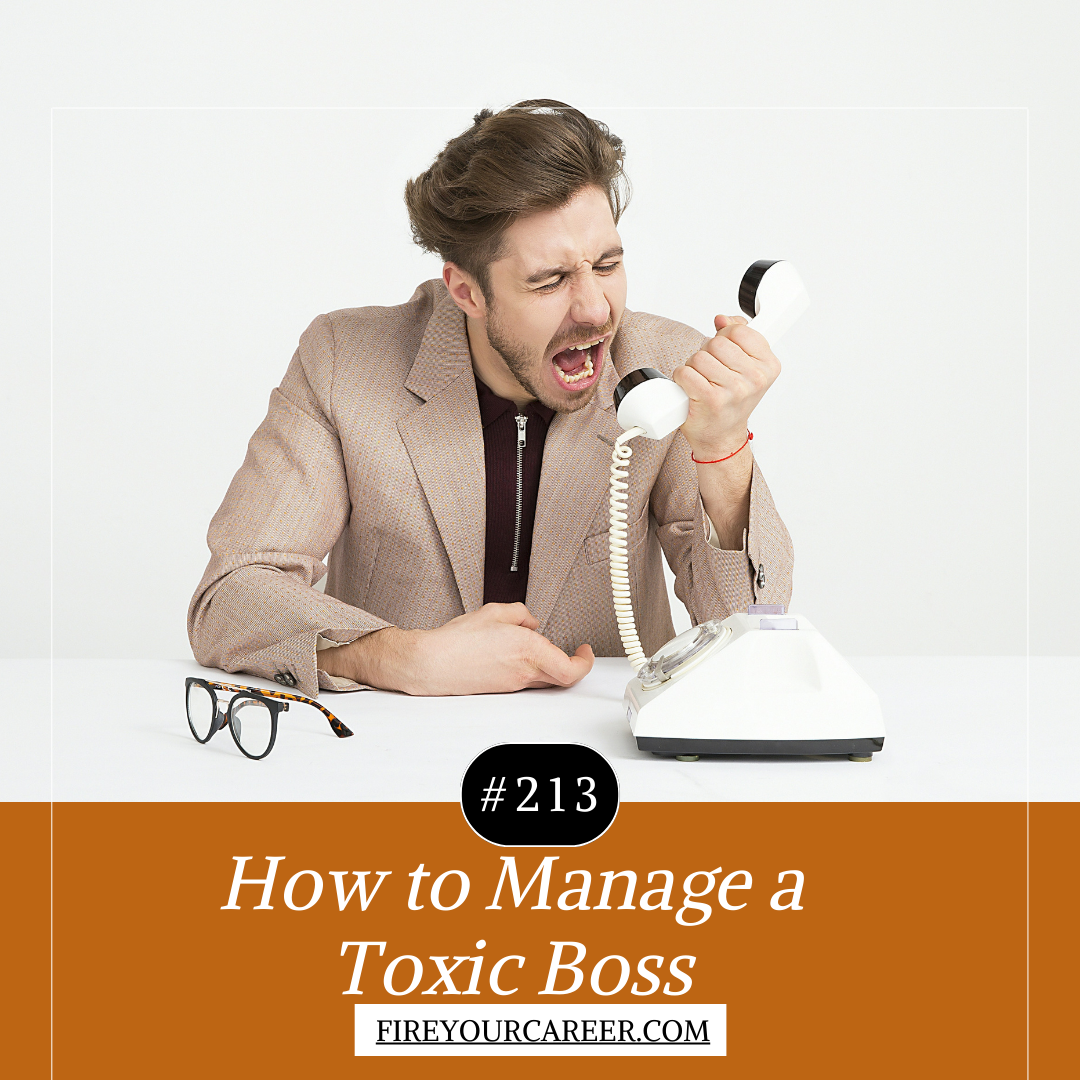
#213: How to Manage a Toxic Boss

#213: How to Manage a Toxic Boss –

It’s one of the biggest motivation killers in the workplace: a toxic boss.

You know the feeling: the Sunday night pit in your stomach, the hesitation to check your inbox, and the feeling that no matter how hard you work, you’re walking on eggshells. 

Dealing with a toxic boss is one of the most significant hurdles you can face as a professional. It drains your energy, clouds your judgment, and makes you question your own competence.

A toxic boss pushes solid performers out the door in droves, annihilating performance like there’s no tomorrow. They destroy solid teams and cost companies a fortune every year.

But before you decide to book a one-way trip to your job exit, you might consider managing your situation first. Perhaps you’re in the job of your dreams, if not for a bad manager.

Even a toxic boss can be managed if handled appropriately. They may make your work situation more difficult, but not necessarily impossible.

It’s also possible that your situation has become so toxic that there’s no way out but through the exit. But how do you know?

Let’s start by exploring the ways to improve your situation. If the tactics below sound familiar, you may have your answer. However, if you haven’t tried any of the approaches that follow, then it’s a good place for you to start.

Adversity is an opportunity to sharpen your professional toolkit. While a toxic boss makes the workplace more difficult, it’s entirely possible to excel in a challenging environment. By shifting your strategy, you can protect your peace while continuing to build your path toward financial freedom.

Let’s explore the strategies you can utilize to manage your toxic boss and make the workplace a healthier environment.

Read More